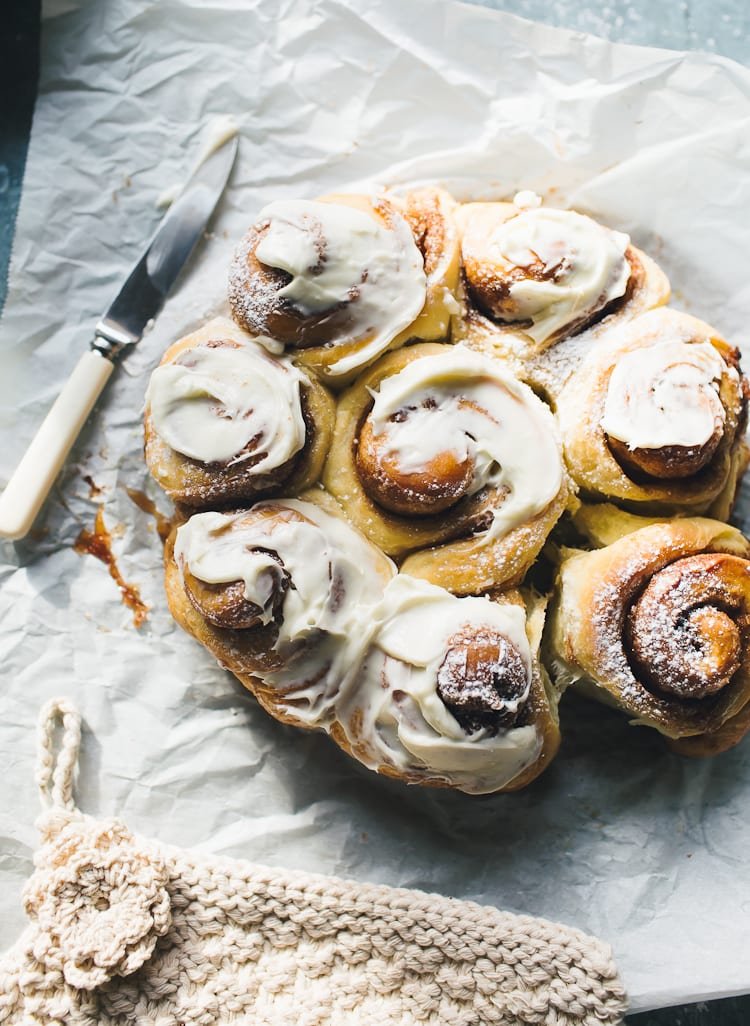
Imagine waking up on a lazy weekend morning to the mouthwatering aroma of fresh baked cinnamon rolls filling every room of your house. There is something truly magical about taking a traditional sweet treat and upgrading it with the incredible depth of real sourdough starter. This recipe brings together the softest homemade dough, a rich cinnamon butter filling, and a silky smooth cream cheese icing that melts into every single swirl. Unlike store bought pastries that often taste artificial or overly sweet, these sourdough cinnamon rolls offer a complex, comforting flavor profile that balances tanginess with pure sweetness. Making them from scratch might sound intimidating at first glance, but the process is actually a joyful culinary journey that rewards your patience with the fluffiest buns you will ever taste.
People all over the world are falling in love with sourdough baking because it transforms basic household ingredients into extraordinary homemade foods. Standard cinnamon rolls rely entirely on commercial yeast to rise quickly, which often leaves the dough feeling heavy or dense in your stomach. Sourdough cinnamon rolls use natural fermentation to build structure, flavor, and airiness, resulting in a light pastry that feels wonderfully gentle on your digestion. The long fermentation process breaks down starches and gluten in the flour, making it far easier to digest while giving the final product a pillow soft texture. Every bite delivers a delightful contrast between the lightly crisp golden outer edges and the gooey, spice filled center that keeps everyone coming back for more.
This recipe is the ultimate comfort food to prepare for holiday mornings, cozy family brunches, or relaxing weekend celebrations with people you love. Baking sourdough cinnamon rolls allows you to slow down, disconnect from your busy daily routine, and enjoy the soulful craft of traditional bread making. Bringing a warm tray of these shiny, glazed pastries to the breakfast table instantly creates cherished memories and brings smiles to the faces of family and friends. It is also a fantastic recipe for health conscious food lovers who want to enjoy classic sweet treats without relying on artificial additives, processed preservatives, or refined commercial yeasts. Preparing food from scratch using natural starter connects you to your kitchen in a deeply satisfying, wholesome way.
Whether you are an experienced baker looking for your next delicious project or a complete beginner eager to try your very first sourdough dessert, this comprehensive guide will walk you through every step of the way. You do not need any fancy bakery equipment or advanced kitchen skills to achieve professional quality results right in your home oven. All you need are basic baking staples, a active sourdough starter, a little bit of time, and a love for warm sweet pastries. By following this easy tutorial, you will master the art of rolling, filling, shaping, and baking soft cinnamon rolls that taste even better than the ones from famous commercial bakeries.
Ingredients You Will Need
To make the dough you will need the following items:
-
Active sourdough starter: 100 grams (bubbly and fed)
-
Whole milk: 240 milliliters (warmed to room temperature)
-
Unsalted butter: 75 grams (melted and slightly cooled)
-
Large egg: 1 piece (room temperature)
-
Granulated sugar: 50 grams
-
Bread flour or all purpose flour: 500 grams
-
Fine sea salt: 6 grams
To make the sweet cinnamon filling you will need the following items:
-
Unsalted butter: 100 grams (very soft at room temperature)
-
Dark brown sugar or light brown sugar: 150 grams
-
Ground cinnamon: 15 grams (about 2 tablespoons)
-
Vanilla extract: 5 milliliters (1 teaspoon)
-
Pinch of fine salt: 1 gram
To make the cream cheese icing you will need the following items:
-
Cream cheese: 115 grams (softened)
-
Unsalted butter: 50 grams (softened)
-
Powdered sugar: 180 grams
-
Whole milk or heavy cream: 30 milliliters (2 tablespoons)
-
Vanilla extract: 5 milliliters (1 teaspoon)
Step by Step Method
Step 1: Mixing the Main Dough
Start by gathering all your dough ingredients so they are ready at room temperature. Take a large mixing bowl and add your active sourdough starter, warm whole milk, melted butter, granulated sugar, and room temperature egg. Whisk these wet ingredients together thoroughly until the sugar dissolves and the liquid looks smooth.
Next, add your flour and fine sea salt into the bowl with the liquid mixture. Use a sturdy wooden spoon or your clean hands to combine the ingredients until no dry white flour spots remain in the bowl. The dough will look a bit shaggy and sticky at this early stage, which is completely normal for sourdough. Cover the bowl loosely with a clean kitchen towel or plastic wrap and let it rest on your kitchen counter for 30 minutes. This short resting period allows the flour to fully absorb the liquid and makes the dough much easier to knead later.
Step 2: Kneading and Fermenting the Dough
After the dough has rested, it is time to build strength in the gluten structure. You can knead the dough by hand on a lightly floured clean surface for about 8 to 10 minutes until it becomes smooth, elastic, and soft. If you prefer using a stand mixer equipped with a dough hook attachment, mix the dough on medium low speed for about 6 to 8 minutes.
Lightly oil a large clean bowl and place your kneaded ball of dough inside it. Cover the bowl tightly with plastic wrap or a wet cloth so the surface of the dough does not dry out. Place the covered bowl in a warm spot in your kitchen to ferment for about 4 to 6 hours. During this bulk fermentation period, your sourdough starter will slowly feed on the sugars in the flour, creating air bubbles and building flavor. The dough should expand in size by roughly 50 percent during this time.
Step 3: Preparing the Cinnamon Filling
While your dough is completing its initial fermentation, you can easily prepare your cinnamon filling. In a medium mixing bowl, combine the very soft unsalted butter, brown sugar, ground cinnamon, vanilla extract, and tiny pinch of salt. Use a spatula or fork to mash and mix all the ingredients together until a smooth, spreadable paste forms. Setting aside a spreadable paste instead of sprinkling dry cinnamon sugar over melted butter ensures your filling stays securely inside the rolls while baking without creating messy liquid leaks.
Step 4: Rolling and Filling the Dough
Once your dough has risen and feels light to the touch, turn it out onto a clean, lightly floured work surface or kitchen counter. Use your hands to gently press out any large air pockets from the dough. Using a wooden rolling pin, gently roll the dough into a large rectangular shape that measures roughly 12 inches by 18 inches across. Try your best to keep the thickness of the dough sheet uniform throughout.
Take your prepared cinnamon butter paste and drop small spoonfuls of it all over the surface of the rolled dough. Use an offset spatula or the back of a spoon to spread the filling evenly across the entire surface of the dough. Be sure to leave a small bare strip of about half an inch along one of the long edges so you can seal the dough log smoothly later.
Step 5: Shaping and Cutting the Rolls
Starting from the long edge covered in filling, begin rolling the dough rectangle upward into a tight, neat log. Roll carefully so the cinnamon paste stays trapped tightly inside each layer. When you reach the bare long edge, pinch the dough seam tightly along the entire length of the log to seal it completely.
To cut clean, perfectly round rolls without squishing the soft dough, use a piece of unflavored dental floss or strong sewing thread. Slide the string underneath the dough log, cross the two ends over the top of the log at your desired cut spot, and pull the string ends quickly in opposite directions. The string will slide straight through the soft dough, giving you clean cuts every time. Divide your log into 12 equal slices.
Step 6: Second Rise and Overnight Chill Option
Lightly grease a 9 inch by 13 inch baking pan or dish with butter. Place the 12 cut rolls into the baking dish, leaving a small amount of space between each roll so they have room to expand.
At this point, you have two choices for your final rise. If you want to bake them the same day, cover the baking dish and let the rolls rise at room temperature for 2 to 4 hours until they look puffy, soft, and touch each other in the pan. If you prefer fresh warm rolls for breakfast the next morning, simply cover the dish tightly and place it in your refrigerator overnight for 8 to 12 hours. The cold temperature slows down the fermentation while continuing to build amazing tangy flavor. If refrigerated overnight, take the rolls out of the fridge about 1 to 2 hours before baking so they can warm up to room temperature and finish rising.
Step 7: Baking to Golden Perfection
Preheat your oven to 350 degrees Fahrenheit (175 degrees Celsius). While the oven heats up, check your rolls to make sure they are soft and puffy.
Place the baking pan on the center rack of your preheated oven. Bake the cinnamon rolls for 25 to 30 minutes until the tops turn a light golden brown color and the edges look set. Be careful not to overbake them, as baking too long can make the bread dry instead of gooey. If you notice the tops browning too quickly during the last 10 minutes of baking, you can loosely place a piece of aluminum foil over the top of the pan to protect them. Remove the hot pan from the oven and let it sit on a cooling rack while you make the icing.
Step 8: Making and Applying Cream Cheese Icing
In a mixing bowl, combine the softened cream cheese and softened butter. Beat them together using a hand mixer or whisk until the mixture turns smooth, creamy, and completely free of lumps. Add the powdered sugar, vanilla extract, and milk or heavy cream to the bowl. Beat again for 2 minutes until you get a glossy, fluffy, spreadable icing.
While the cinnamon rolls are still warm from the oven, spread generous amounts of the cream cheese icing over the top of each roll. The warmth from the fresh baked rolls will gently melt the icing down into every swirl and crevice, creating an irresistible gooey texture. Serve the rolls warm immediately and enjoy every delicious bite.
Why This Recipe Is Special
This sourdough cinnamon roll recipe stands out from ordinary pastry recipes for several key reasons. The primary secret lies in the natural power of wild sourdough fermentation. Traditional commercial yeasts force dough to rise very fast, which strips away the opportunity for complex flavor development. Sourdough starter works slowly, breaking down complex carbohydrates and creating organic acids that impart a delicate, sophisticated tanginess to balance the sweet cinnamon sugar filling. This unique taste profile prevents the pastry from feeling cloying or unpleasantly sweet on your palate.
Beyond incredible taste, this sourdough recipe offers fantastic health advantages for your body. The long slow fermentation process allows naturally occurring enzymes in the sourdough culture to break down phytic acid, an antinutrient found in grains that normally blocks your body from absorbing valuable minerals like magnesium, zinc, and iron. Furthermore, the partial breakdown of gluten proteins during sourdough fermentation makes these rolls much gentler on sensitive digestive systems. Many people who feel bloated after eating regular yeast bread find that they can enjoy long fermented sourdough baked goods without any digestive discomfort at all.
Finally, the texture achieved through this sourdough recipe is truly unmatched by fast commercial methods. The dough develops a natural elasticity and moisture retention capacity during fermentation. This means your homemade rolls remain surprisingly soft, pillowy, and moist for several days after baking. You get a restaurant quality pastry experience right from your home kitchen using simple, wholesome, real food ingredients.
Extra Tips for Better Taste
To make your sourdough cinnamon rolls taste like they came from a high end artisan bakery, try these creative improvement tips:
-
Use Heavy Cream Pour Over: Right before sliding your risen rolls into the hot oven, pour about 60 milliliters (4 tablespoons) of warm heavy cream evenly over the top of the rolls in the pan. As the rolls bake, they will absorb the heavy cream, resulting in an extraordinarily gooey, rich center just like famous mall cinnamon rolls.
-
Upgrade Your Spice Blend: Do not limit yourself to plain ground cinnamon alone. Add half a teaspoon of ground cardamom, a pinch of fresh grated nutmeg, or a dash of ground ginger to your brown sugar filling paste. These warm baking spices add incredible warmth and aromatic complexity to every single layer.
-
Choose Dark Brown Sugar: Dark brown sugar contains more natural molasses than light brown sugar. Using dark brown sugar in your filling creates a deeper caramel style flavor that pairs perfectly with the subtle sour notes of the sourdough pastry.
-
Feed Your Starter Well: Make sure your sourdough starter is fully active, bubbly, and fed about 4 to 6 hours before you begin mixing your dough. An active, happy starter ensures your rolls rise beautifully without needing any added commercial yeast.
-
Add Citrus Zest: Grate a tiny bit of fresh orange zest into the cinnamon filling or add fresh lemon zest to your cream cheese icing. The bright citrus oils cut through the richness of the butter and sugar, adding a refreshing burst of flavor.
-
Store and Reheat Properly: If you have leftover cinnamon rolls, store them in an airtight container at room temperature for up to two days or in the refrigerator for up to five days. To revive that fresh out of the oven texture, simply warm individual rolls in your microwave for 15 to 20 seconds before eating.
Final Thoughts
Baking sourdough cinnamon rolls at home is a rewarding experience that combines the ancient art of natural bread making with the simple joy of sweet comfort food. Taking the extra time to let your dough ferment naturally yields remarkable benefits in flavor, digestibility, and pillow soft texture that fast yeast recipes simply cannot duplicate. Bringing these magnificent, glazed swirls to your family breakfast table turns an ordinary day into a memorable celebration of good food made with love. Take your time, enjoy the creative process of handling the dough, and savor every gooey bite of your homemade sourdough masterwork.
Nutrition Details
Here is an estimated nutritional breakdown for this sourdough cinnamon roll recipe. Values are calculated per serving based on a total yield of 12 equal rolls.
Nutrition Table Per Serving
| Nutrient Component | Amount Per Serving | Daily Value Percentage |
| Total Calories | 385 kcal | 19 percent |
| Total Fat | 18 grams | 23 percent |
| Saturated Fat | 11 grams | 55 percent |
| Trans Fat | 0 grams | 0 percent |
| Cholesterol | 55 milligrams | 18 percent |
| Sodium | 220 milligrams | 10 percent |
| Total Carbohydrates | 52 grams | 19 percent |
| Dietary Fiber | 2 grams | 7 percent |
| Total Sugars | 26 grams | 52 percent |
| Protein | 6 grams | 12 percent |
| Calcium | 45 milligrams | 4 percent |
| Iron | 2 milligrams | 11 percent |
| Potassium | 95 milligrams | 2 percent |
Disclaimer
Please keep in mind that nutritional values provided in this article are estimates based on standard baking ingredient databases. Exact calorie counts and nutrient levels can vary depending on the specific brands of flour, butter, cream cheese, and sugars you choose to use in your kitchen. Everyone’s body, metabolism, and dietary needs are unique, so individual health results and digestive responses to sourdough products may vary from person to person. If you have severe gluten allergies, celiac disease, or specific medical dietary restrictions, please consult with a qualified medical professional or certified nutritionist before modifying your diet.