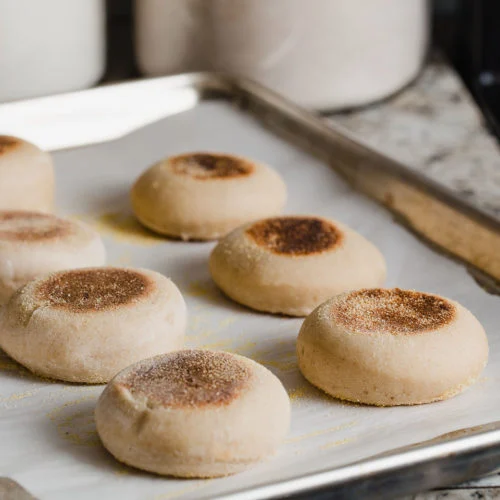
Making sourdough English muffins at home is a simple and joyful baking experience that brings classic bakery quality right into your kitchen. This specific recipe uses basic ingredients that you likely already have in your pantry, combining active starter with flour, water, milk, and a pinch of salt to create a remarkably soft yet chewy texture. Beginners often worry that baking with wild yeast requires advanced techniques or professional equipment, but this approach relies on straightforward steps that anyone can follow with absolute ease. Instead of relying on instant dry yeast, this method gives the dough time to rise naturally, allowing rich flavors to develop without extra effort. Cooking these muffins on a warm stove top rather than inside a standard oven produces a golden crust on the outside while keeping the inside delightfully airy. You will love how easy it is to mix the dough in the evening, let it sit overnight on your kitchen counter, and shape it fresh the following morning.
People all over the world love this recipe because it transforms basic food items into an incredible morning treat that feels truly special. The signature feature of a great English muffin is the large collection of nooks and crannies hidden inside, perfect for holding melted butter, sweet jam, or rich honey. Store bought options often feel dry, crumbly, or packed with artificial preservatives, whereas fresh homemade sourdough muffins offer a light, pillowy crumb alongside a gentle tangy flavor. Eating one fresh off the skillet provides a comforting crunch that instant varieties simply cannot replicate, making your breakfast feel like a high end cafe experience. Furthermore, the process of mixing, shaping, and cooking dough brings a deep sense of accomplishment to your routine. Friends and family will constantly ask you to make extra batches because the incredible taste and delightful aroma simply outshine anything available on grocery store shelves.
Preparing this dish is a wonderful choice whether you want to improve your daily wellness, save money on weekly groceries, or simply enjoy a delicious meal with loved ones. From a wellness perspective, long fermentation breaks down complex starches and gluten proteins in the flour, making the resulting bread much easier on your stomach compared to fast rise factory options. People who sometimes feel heavy or bloated after eating regular white bread often find that fermented baked goods agree with their digestive system far better. On busy weekday mornings, having a freezer full of pre sliced homemade muffins makes breakfast fast, wholesome, and stress free for the entire household. They also make a fantastic addition to relaxed weekend brunches where you can serve them alongside poached eggs, fresh avocado slices, crispy bacon, or sweet fruit spreads to impress your guests.
Choosing to bake your own sourdough English muffins allows you to take complete control over what goes into your body while embracing a satisfying culinary hobby. Many traditional bread recipes require long hours of intense kneading, but this gentle process works through simple waiting periods that fit easily into a busy work schedule. You can easily double or triple the quantities to prepare large batches in advance, securing a healthy staple for your family throughout the full month. Children love watching the soft dough circles puff up on the warm skillet, turning a basic cooking session into a fun learning activity for the entire family. Every single bite delivers a wonderful balance of crisp texture and tender softness, proving that real food made from scratch is always worth the small effort required. Starting this baking habit brings comfort to your home, fills your kitchen with amazing smells, and keeps everyone feeling energized all day long.
Ingredients You Will Need
-
Active sourdough starter, one cup or two hundred forty grams
-
All purpose flour, three cups or three hundred sixty grams
-
Whole milk, half cup or one hundred twenty milliliters
-
Warm water, half cup or one hundred twenty milliliters
-
Honey or maple syrup, one tablespoon or twenty grams
-
Fine sea salt, one teaspoon or six grams
-
Baking soda, half teaspoon or three grams
-
Cornmeal or semolina flour for dusting, quarter cup or thirty grams
-
Unsalted butter for the skillet, one tablespoon or fifteen grams
Step by Step Method
Mixing The Starter And Liquids
Begin by taking a large mixing bowl and adding your active sourdough starter into it. Make sure your starter is bubbly, active, and fed a few hours before you begin mixing. Pour in the warm water, whole milk, and honey. Stir everything together using a wooden spoon or a silicone spatula until the liquid becomes smooth and milky white.
Adding Flour And Resting The Dough
Pour the all purpose flour and sea salt directly into the liquid mixture. Stir well with your spoon until all the dry flour disappears and a shaggy dough forms. Cover the mixing bowl with a clean kitchen towel or plastic wrap. Let this mixture rest at room temperature for eight to twelve hours, or overnight, so the fermentation process can work its magic.
Incorporating Baking Soda
The next morning, uncover your bowl. You will notice the dough has expanded, grown soft, and developed a pleasant sour aroma. Sprinkle the baking soda evenly over the top of the dough. Use your hands to stretch and fold the dough repeatedly for about two minutes, ensuring the baking soda mixes thoroughly into every single part.
Preparing Your Work Surface
Dust a clean kitchen counter or large cutting board generously with cornmeal or semolina flour. Cornmeal gives these muffins their iconic crunchy exterior and prevents the soft dough from sticking to your hands or table. Transfer the dough out of the bowl and place it directly on top of the cornmeal layer.
Shaping The Dough
Gently press the dough down using your hands until it is about one inch thick. Do not use a rolling pin, as pressing too hard can pop all the tiny air bubbles inside that create the desired texture. Use a round glass or biscuit cutter to cut out individual dough circles. Gather any leftover scraps, gently press them together again, and cut out remaining rounds.
Dusting And Second Rest
Place the cut dough circles onto a baking sheet lined with parchment paper and sprinkled with extra cornmeal. Dust the top of each dough circle with a little bit more cornmeal. Cover the tray loosely with a light towel and let the muffins rest for twenty to thirty minutes so they can puff up slightly before cooking.
Warming The Skillet
Heat a large cast iron skillet or heavy bottomed pan over low heat on your stove top. Add a tiny bit of butter to grease the surface lightly. Keep the heat nice and low because cooking too fast on high heat will burn the outside while leaving the middle raw and doughy.
Cooking The First Side
Place three or four dough circles into the warm skillet, making sure not to overcrowd the pan. Cover the skillet with a lid to trap the heat and steam. Cook on low heat for about six to eight minutes until the bottoms turn a deep golden brown color and the muffins swell up tall.
Flipping And Finishing
Carefully flip each muffin over using a flat spatula. Cover the pan again with the lid and cook the second side for another six to eight minutes until golden brown. Transfer the cooked muffins to a wire cooling rack and repeat the cooking process with the remaining dough circles.
Cooling And Fork Splitting
Allow the finished muffins to cool down completely on the wire rack for at least twenty minutes. To open them properly, insert the tines of a fork all the way around the middle edge of the muffin and gently pull it apart into two halves. Using a fork instead of a knife preserves all the delightful internal nooks and crannies.
Why This Recipe Is Special
This sourdough English muffin recipe stands out because it blends old world fermentation traditions with extreme daily convenience. Unlike commercial grocery store breads that rely on chemical additives, commercial yeast, and artificial preservatives to achieve volume, this natural recipe relies entirely on wild cultures and simple patience. The extended fermentation time gives the sourdough culture plenty of opportunity to break down phytates, which are naturally occurring compounds in grains that can make mineral absorption difficult. As a result, your body can absorb essential nutrients like iron, zinc, and magnesium much more efficiently.
Another major benefit of this recipe is its gentle impact on digestion. The natural acid produced during fermentation transforms the structure of the flour, making the baked goods far easier to break down in the human gut. Many individuals who experience tiredness or stomach discomfort after eating ordinary factory bread enjoy these fermented muffins without any trouble at all. The unique flavor profile also offers a subtle, satisfying tang that complements both savory toppings like eggs and cheese as well as sweet spreads like berry preserves or clover honey.
Cooking these muffins on top of the stove rather than inside a traditional oven saves energy and prevents your kitchen from heating up unnecessarily. The combination of a crispy cornmeal coating with a moist, tender interior creates an incredible textural contrast that mass produced options simply cannot match. Additionally, this recipe is extremely budget friendly, allowing you to produce a large batch of high quality, artisan bread products for just a fraction of what you would spend at a commercial bakery.
Extra Tips For Better Taste
To achieve the best possible result, always ensure your sourdough starter is fully active and fed before you begin mixing your ingredients. An active starter creates the optimal amount of gas bubbles, which translates directly into larger nooks and crannies inside your finished muffins. If you prefer a stronger sour flavor, you can place your mixed dough inside the refrigerator overnight for sixteen hours instead of leaving it on the counter for eight hours. Cold fermentation slows down yeast activity while allowing beneficial lactic acid bacteria to build up richer flavor notes.
Experimenting with different choices of flour can also change the taste and texture in exciting ways. You can substitute one cup of all purpose flour with whole wheat flour or rye flour to add a nuttier, earthier taste to your morning meal. Using high quality whole milk adds richness and moisture to the crumb, but you can easily use unsweetened almond milk, oat milk, or coconut milk if you want a dairy free alternative. Adding a small drop of vanilla extract or a pinch of cinnamon into the wet mixture offers a subtle warm aroma that pairs beautifully with sweet toppings.
When it comes to cooking, keeping your stove top heat consistently low is the most crucial rule to follow. Cooking over low heat allows the center of the dough to cook all the way through while developing a beautifully even, golden brown crust on the outside. Always use a fork rather than a serrated knife to open your cooled muffins. Splitting them open with a fork tears the inner bread fibers naturally, creating rough surfaces that catch and hold melted butter much better than a smooth knife cut ever could. Toasting the split halves in a toaster before serving enhances that crunch even further.
Final Thoughts
Baking your own sourdough English muffins is a incredibly rewarding journey that brings wholesome, delicious comfort directly into your everyday kitchen life. With just a few simple pantry ingredients and a little bit of patience, you can transform basic flour and water into artisan bakery items that bring happiness to your breakfast table. The simple joy of splitting open a warm, self made muffin and watching butter melt into every tiny crevice is well worth the small effort it takes to mix the dough. Give this accessible recipe a try this week, share the delicious results with your loved ones, and enjoy the wonderful feeling of creating real, nutritious food right at home.
Nutrition Details
Below you will find the estimated nutritional breakdown for this sourdough English muffin recipe. Values are calculated per single serving, assuming the batch yields eight equal sized muffins.
| Nutrient Name | Quantity Per Serving | Daily Value Percentage |
| Serving Size | One Muffin | Not Applicable |
| Total Calories | One hundred eighty | Nine Percent |
| Total Fat | Two grams | Three Percent |
| Saturated Fat | One gram | Five Percent |
| Trans Fat | Zero grams | Zero Percent |
| Cholesterol | Five milligrams | Two Percent |
| Sodium | Two hundred ninety milligrams | Twelve Percent |
| Total Carbohydrates | Thirty six grams | Thirteen Percent |
| Dietary Fiber | Two grams | Seven Percent |
| Total Sugars | Two grams | Four Percent |
| Protein | Six grams | Twelve Percent |
| Calcium | Forty milligrams | Four Percent |
| Iron | Two milligrams | Ten Percent |
| Potassium | Eighty milligrams | Two Percent |
Disclaimer
The information provided in this article is intended solely for general educational, culinary, and informational purposes. Everyone has a unique body, metabolic rate, and personal health situation, which means individual dietary responses and nutritional needs may vary significantly from person to person. While sourdough products are often easier on the digestive system for many people, this recipe still contains real wheat gluten and is not suitable for individuals diagnosed with celiac disease or severe gluten allergies. Always consult with a qualified healthcare professional or certified nutritionist if you have specific medical concerns, food allergies, or special dietary requirements before making major changes to your eating habits.