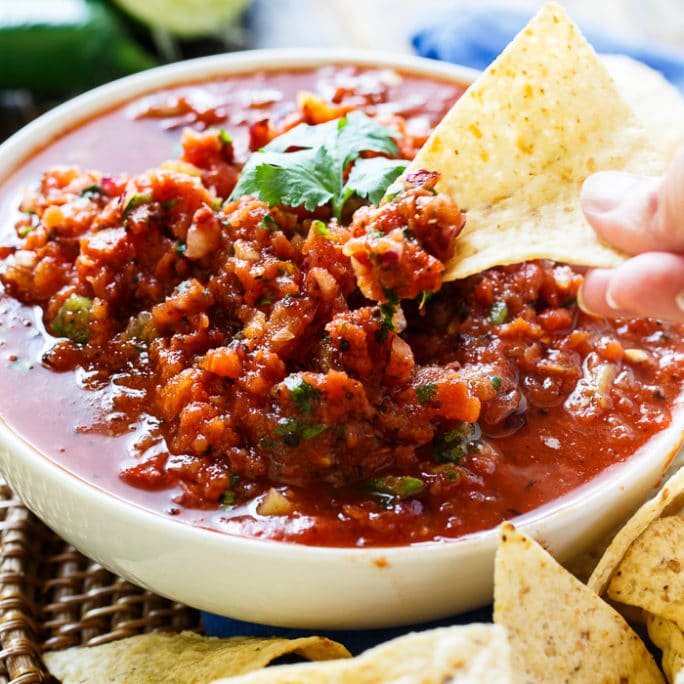
Making your own salsa at home is one of the easiest ways to bring fresh, vibrant flavor into your kitchen without relying on store bought jars that are often full of artificial preservatives, excess sodium, and hidden sugars. This homemade spicy salsa recipe is all about taking simple, raw ingredients like juicy tomatoes, fiery hot peppers, crisp onions, fragrant cilantro, and fresh lime juice, and turning them into a delicious dip that explodes with fresh taste. When you prepare salsa in your own home, you have complete control over every single component, meaning you can adjust the heat level, the saltiness, and the texture to match your exact personal preferences. Whether you like your salsa smooth and liquid or chunky and thick, this recipe serves as the ultimate starting template that yields incredible results every single time you prepare it. Once you discover how quick, fresh, and customizable this homemade version is, you will likely never want to go back to buying processed salsa off a supermarket shelf ever again.
People absolutely love this salsa recipe because it strikes a perfect balance between intense heat and refreshing tanginess that leaves everyone asking for the exact secret ingredient. The secret is simply using top quality produce at peak ripeness, combined with the ideal balance of acid from real lime juice and heat from carefully selected chili peppers. It offers a bright, clean flavor profile that instantly upgrades any meal, turning ordinary chips or basic tacos into a mouthwatering dining experience that feels like it came from an authentic Mexican restaurant. On top of its incredible flavor, people appreciate how budget friendly and convenient it is to throw together using everyday kitchen tools like a blender, a food processor, or even just a standard cutting board and a sharp chef knife. It is an extremely versatile condiment that satisfies intense cravings for spicy food while keeping your meals exciting, colorful, and packed with irresistible natural aromas that invite everyone to the table.
There are so many great reasons to make this fiery salsa, whether you are hosting a lively game day party with friends, throwing a weekend barbecue for family, or simply looking for a healthy way to add massive flavor to your weekly meal prep routine. From an emotional perspective, preparing food from scratch brings a strong sense of joy and accomplishment, especially when you watch your loved ones happily dipping crisp tortilla chips into a bowl you made entirely with your own hands. From a health and fitness viewpoint, this spicy salsa is a total superfood condiment because it is naturally low in calories, virtually fat free, and packed with essential vitamins like vitamin C and capsaicin, which can help boost your metabolism and support healthy digestion. If you are following a specific fitness diet such as low carb, keto, vegan, or gluten free, this salsa fits into your lifestyle effortlessly while ensuring you never feel like you are sacrificing bold taste for health benefits.
Making this salsa is also a fantastic way to celebrate seasonal produce during the warm summer months when garden tomatoes and peppers are abundantly sweet and full of natural juice. However, even during the middle of winter, you can easily adapt this recipe by roasting your vegetables under a broiler to unlock deep, smoky flavors that make cold days feel much warmer and more comforting. It is the perfect recipe to turn to whenever your plain chicken breasts, grilled fish, rice bowls, or morning scrambled eggs need a powerful kick of energy and excitement. Preparing a fresh batch on Sunday means you have a versatile, flavor packed bowl resting in your refrigerator, ready to transform everyday dinners into something truly special throughout the entire busy work week ahead.
Ingredients You Will Need
To make this delicious salsa, you will need to gather the following fresh produce and pantry staples:
4 large ripe red tomatoes, washed and roughly chopped 2 jalapeno peppers, washed with seeds removed for mild heat, or kept intact for medium heat 1 habanero pepper or serrano pepper, washed and finely minced for serious spicy heat 1 medium red onion or white onion, peeled and chopped into small pieces 3 garlic cloves, peeled and minced very fine 1 cup fresh cilantro leaves, washed and loosely chopped 3 tablespoons fresh lime juice, freshly squeezed from real limes 1 teaspoon sea salt or kosher salt, adjusted to your personal taste half a teaspoon ground cumin powder half a teaspoon black pepper, freshly ground 1 tablespoon extra virgin olive oil, optional for a smoother texture
Step by Step Method
Step 1: Preparing Your Vegetables Start by thoroughly washing all your fresh vegetables under cold running water. Pat the tomatoes, peppers, and cilantro dry using a clean kitchen paper towel. Take your sharp chef knife and slice the tomatoes into large quarters, removing any hard stem areas at the top. Next, slice your onions into smaller chunks so they blend evenly later on. For the peppers, put on kitchen gloves if you have sensitive skin, then chop off the green stem ends. If you want a milder salsa, carefully slice the peppers in half and scrape out the white inner membrane along with all the tiny seeds using a spoon. If you adore extra spicy food, keep the seeds and membranes intact because that is where most of the fiery heat lives.
Step 2: Chopping the Fresh Herbs and Garlic Peel the outer papery skin off your garlic cloves and press down on them with the flat side of your knife blade to crush them slightly. Mince the crushed garlic as finely as you can so that no one gets a huge bite of raw garlic in the final dip. Take your fresh bunch of cilantro, trim away the long thick bottom stems, and roughly chop the green leaves. Lime juice is best when squeezed fresh, so cut two small limes in half and squeeze out all their juice into a small cup, making sure no tiny seeds drop into the juice.
Step 3: Blending or Hand Chopping You now have two choices depending on the final texture you want for your salsa. If you enjoy a thick chunky style salsa, place your chopped tomatoes, onions, garlic, peppers, and cilantro onto a large cutting board and continue chopping everything by hand until all pieces are uniform and small. Transfer the hand chopped mixture into a big mixing bowl. If you prefer a smoother restaurant style salsa, place all your chopped ingredients into a food processor or a blender. Pulse the machine in short bursts of two seconds each. Do not run the blender continuously, or your salsa will turn into a watery pink soup. Pulse around five to eight times until you reach a nicely textured, slightly chunky consistency that clings well to a chip.
Step 4: Seasoning and Mixing Pour your blended or hand chopped salsa into a non reactive glass or ceramic mixing bowl. Add the freshly squeezed lime juice, the ground cumin powder, the sea salt, and the black pepper. If you decided to use extra virgin olive oil for added richness, pour it in now. Use a large spoon to stir all the ingredients together thoroughly so the salt, spices, and lime juice coat every single piece of vegetable evenly.
Step 5: Tasting and Adjusting Take a plain tortilla chip or a small spoon and take a small taste of your fresh salsa. Pay attention to how it feels on your tongue. If the heat is too intense, you can add a tiny bit more chopped tomato or a small splash of honey to calm down the fire. If it tastes slightly flat, it usually means it needs a bit more fresh lime juice or an extra pinch of sea salt to bring all the bright vegetable flavors to life. Adjust the seasonings slowly, stirring well after each tiny addition until the taste makes your mouth water.
Step 6: Chilling for Maximum Flavor While you can certainly eat this fresh salsa immediately right out of the bowl, it will taste ten times better if you allow it to rest in your refrigerator for at least thirty minutes to one hour before serving. Covering the bowl tightly with plastic wrap or transferring the salsa into a sealed glass mason jar allows all the juices, spices, lime acid, and spicy pepper oils to meld together into one harmonious, full bodied flavor profile. Serve cold or at room temperature alongside your favorite crisp corn chips.
Why This Recipe Is Special
This homemade salsa recipe is truly special because it brings together incredible taste, outstanding health advantages, and unmatched culinary simplicity in a single dish. Store bought salsas are almost always cooked at very high heat to make them shelf stable for months, which destroys delicate vitamins and changes the natural taste of fresh vegetables into something flat and cooked. By keeping this recipe raw and fresh, you preserve the natural crunchy texture, vibrant red color, and bright flavor of living foods. It tastes clean, energetic, and truly homemade, far surpassing any jarred alternative you can buy at a convenience store.
From a health perspective, this recipe is a powerful nutritional powerhouse packed into a low calorie condiment. Tomatoes are famous for being loaded with lycopene, a potent antioxidant that supports heart health, protects skin from sun damage, and helps lower inflammation throughout the body. The fresh lime juice provides a generous dose of immune boosting vitamin C, while garlic contains natural sulfur compounds that support a strong immune system and help maintain healthy blood pressure levels. Furthermore, the fiery capsaicin found in jalapeno and habanero peppers has been shown in scientific studies to temporarily boost metabolism, aid in weight management, and release feel good endorphins in the brain that make you feel happy and energized.
Another reason this recipe stands out is its extreme inclusivity for all kinds of diets. It is naturally plant based, dairy free, gluten free, nut free, low fat, and fully keto friendly. You can serve it at gatherings without worrying about common dietary restrictions, making it an ultimate crowd pleaser for parties, family holidays, or simple dinners with friends. It allows people who are eating healthy to enjoy immense flavor without adding heavy calories, sugars, artificial thickeners, or unhealthy vegetable oils to their daily meals.
Extra Tips for Better Taste
Roasting for Smoky Flavor If you want to take your salsa to a whole new level of gourmet richness, try roasting your vegetables before blending them. Place your whole tomatoes, onion quarters, garlic cloves with skins on, and whole peppers onto a baking sheet. Place them under your oven broiler for about eight to ten minutes until the skins char, blacken, and blister nicely. Let them cool down, peel the skin off the garlic, and blend everything together. The resulting roasted salsa will have a deep, complex, smoky taste that tastes like it came straight from a wood fired grill.
Choosing the Right Tomatoes The type of tomatoes you pick makes a massive difference in your final result. Roma tomatoes or plum tomatoes are usually the absolute best choice for making salsa because they have thick meat, fewer watery seeds, and a vibrant red color. If you use large field tomatoes or beefsteak tomatoes, your salsa might end up a bit too watery. If your tomatoes feel overly liquid, simply scoop out the watery seed centers with a spoon before chopping them up.
Adding Sweetness to Balance Heat If you accidentally make your salsa way too spicy for your guests, do not panic or throw it away. You can easily balance out aggressive heat by adding a tiny touch of natural sweetness. Stirring in half a cup of finely diced fresh fruit like sweet mango, golden pineapple, or ripe peach works wonders. The natural fruit sugars complement the heat of the peppers beautifully, creating a legendary sweet and spicy combination that goes amazingly well with grilled chicken or fish tacos.
Using Fresh Herbs Correctly Cilantro is an essential herb in authentic salsa, but its flavor can degrade quickly if handled roughly. Always wash your cilantro in cold water and dry it thoroughly before chopping so it does not turn into a soggy green paste on your cutting board. Use a very sharp knife to slice through the cilantro leaves cleanly in one swift motion. If you are one of the people who think cilantro tastes like soap due to genetics, you can easily replace it with fresh flat leaf Italian parsley or green spring onions for a lovely herbal crunch.
Proper Storage Practices Always store your fresh salsa in a clean glass container with an airtight lid, such as a mason jar, rather than a plastic container. Glass does not absorb tomato acids, dark red colors, or strong garlic odors. Kept in the refrigerator, this fresh salsa will stay deliciously fresh and crisp for up to five to seven days. As it sits, the vegetables will naturally release extra juice, so simply give the salsa a good quick stir with a spoon right before you serve it to bring all the flavors back together.
Final Thoughts
Creating your own fiery homemade spicy salsa is a quick, fun, and deeply rewarding kitchen project that instantly elevates your everyday eating experience. With simple fresh ingredients and just a few minutes of prep time, you can create a incredible condiment that is far healthier, cheaper, and infinitely more delicious than anything you can purchase in a store. Do not be afraid to experiment with different pepper varieties, garlic amounts, or lime juice levels to create your own signature house salsa recipe. Gather your fresh produce, grab your favorite bag of crisp tortilla chips, and enjoy every single spicy bite of this wonderful homemade dip with your family and friends.
Nutrition Details
Here is an estimated nutrition breakdown for this fresh salsa recipe. Keep in mind that exact numbers can shift slightly depending on the exact size and sweetness of your fresh produce.
Nutrition Table Recipe Totals vs Per Serving
Nutrient Category | Total Recipe Amount | Amount Per Serving (2 Tablespoons) Total Calories | 160 kcal | 10 kcal Total Carbohydrates | 34 grams | 2 grams Dietary Fiber | 8 grams | 0.5 grams Natural Sugars | 20 grams | 1 gram Protein | 6 grams | 0.3 grams Total Fat | 2 grams | 0.1 grams Saturated Fat | 0.3 grams | 0 grams Sodium | 2100 milligrams | 130 milligrams Potassium | 1200 milligrams | 75 milligrams Vitamin C | 180 milligrams | 11 milligrams Vitamin A | 3200 IU | 200 IU
Servings per batch: Approximately 16 servings (2 tablespoons per serving)
Disclaimer
Please remember that everyone’s body, health conditions, and digestive systems are completely unique, which means individual responses to spicy foods can vary significantly. Capasaicin, the natural compound that makes peppers hot, can cause mild stomach discomfort, heartburn, or digestive distress in individuals who have sensitive stomachs, acid reflux, or irritable bowel issues. If you are not accustomed to eating spicy food, it is always best to start with a very small portion or reduce the number of hot peppers in the recipe. The nutritional information provided in this article is for general educational and informational purposes only and should not replace professional medical or dietary advice from a qualified doctor or licensed nutritionist.